
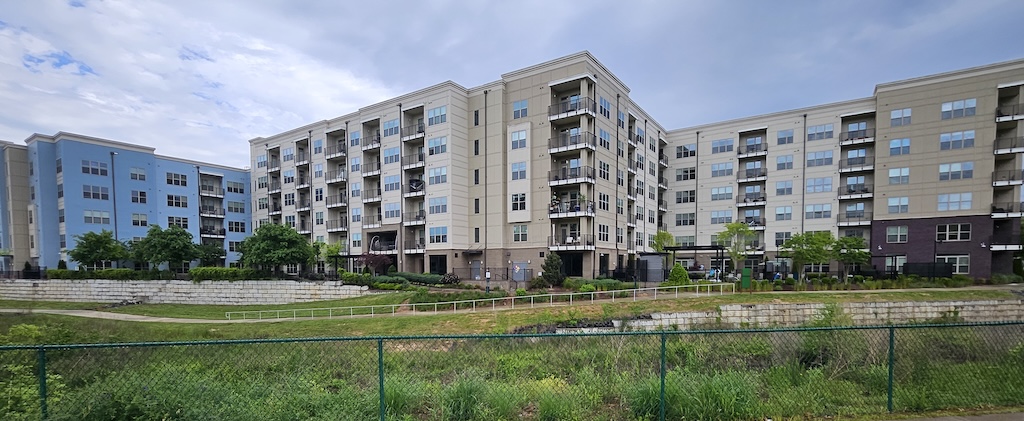
Chapel Hill is getting denser, as anyone who has driven around the town can attest to. That is a good thing, given our need for more housing and the constraints imposed by a nearly built-out town and the rural buffer.
However, this densification is occurring in an atypical way. In most older cities and town, density spreads outward from an older, denser “downtown” that concentrates commercial activity and also has residences. Over time more peripheral areas become denser as well with an emphasis on residential uses.
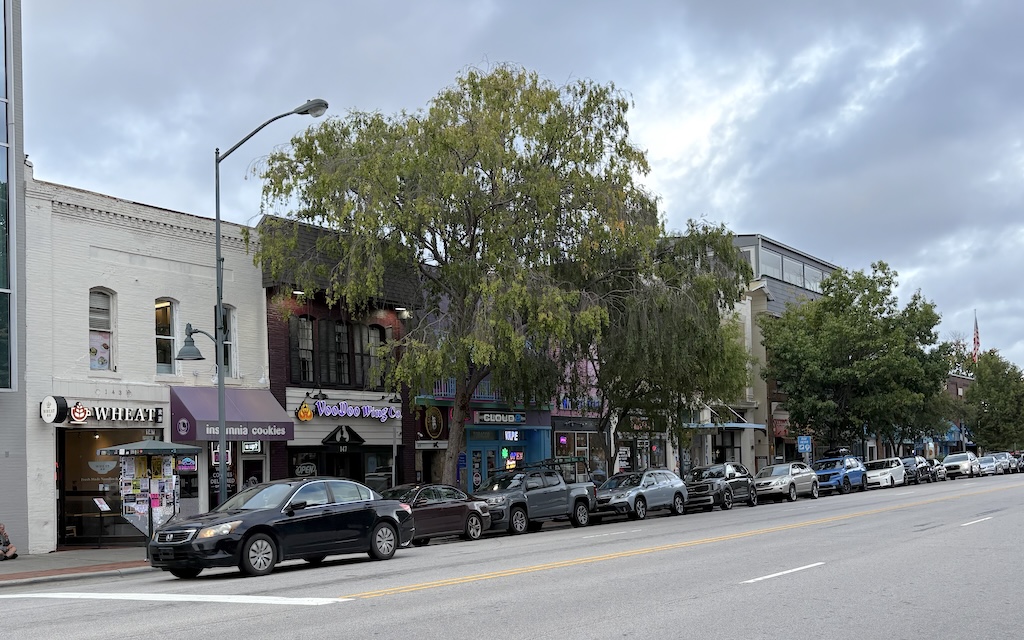
Chapel Hill has evolved differently, however. Most of our downtown is fairly low density (with some exceptions – more about that later). Our Downtown, particularly the 100 block of East and Franklin and the 400 block of West Franklin St. are quite low density, with largely one and two story buildings (many over 100 years old). And as one goes east on Franklin and Rosemary, large-lot single family homes predominate.
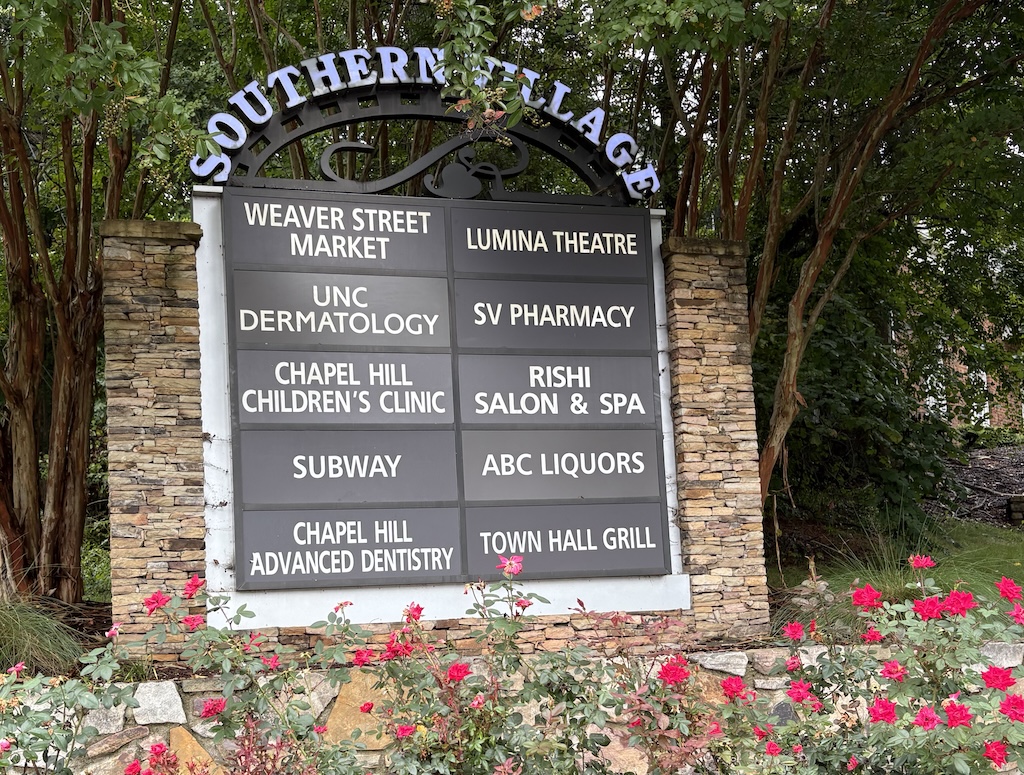
Instead, the preponderance of our residential densification is taking place at the periphery, with some commercial development as well. We see this clearly with the recent development of the Blue Hill district, emerging development along east route 54, as well as in older developments such as Meadowmont and Southern Village.
Why should we care? There are at least three reasons. First, one of the goals of densification is to create compact, walkable, and transit-friendly neighborhoods that are well-connected to each other and the town overall – did I hear someone mention 15-minute cities. However, instead of creating neighborhoods that are woven tightly into the fabric of the town, we have islands of density that may or may not internally walkable, are not connected to the town as a whole, and are difficult to efficiently serve with public transit. Getting to almost anywhere else in town on foot – or even by bike – from Southern Village, for example, is a real challenge. As a result, these developments remain car-oriented and much of the land in them is taken up by parking, either horizontally or vertically.
The second reason is that many of these developments, by virtue of being on the town’s periphery, are located in close proximity to low-density, single-family neighborhoods. Not surprisingly, this results in conflicts and friction when the developments are being considered for Council approval and after they are eventually constructed.
Third, it is important to recognize that having a low density downtown has severely limited its vibrancy and attractiveness to the businesses that could make it more vibrant. Without a density of businesses and residents, there is not enough economic activity to support the kinds of establishments – restaurants, entertainment venues, galleries, and the like, that help make a downtown vital and exciting. As a result, we don’t have the kind of downtown we once had and so many of our residents want to have again.
So where do we go from here? Realistically, we can’t – and shouldn’t want to – stop densification on the periphery. We should, however, work to ensure that these developments are clustered, connected, walkable, transit-friendly, and mixed use.
And we have to densify downtown to finally make it a 21st century place, not an early 20th century one. Some densification has occurred with the development of Greenbridge, 140 West, Carolina Square, and the AC Marriott. And to its credit, the council has approved two biolabs, an apartment building, and a hotel – and built a parking deck to support them — that if built will provide the residents and workers to support the kinds of businesses our downtown so desperately needs to create a place that so many of our residents, workers, and visitors want.