
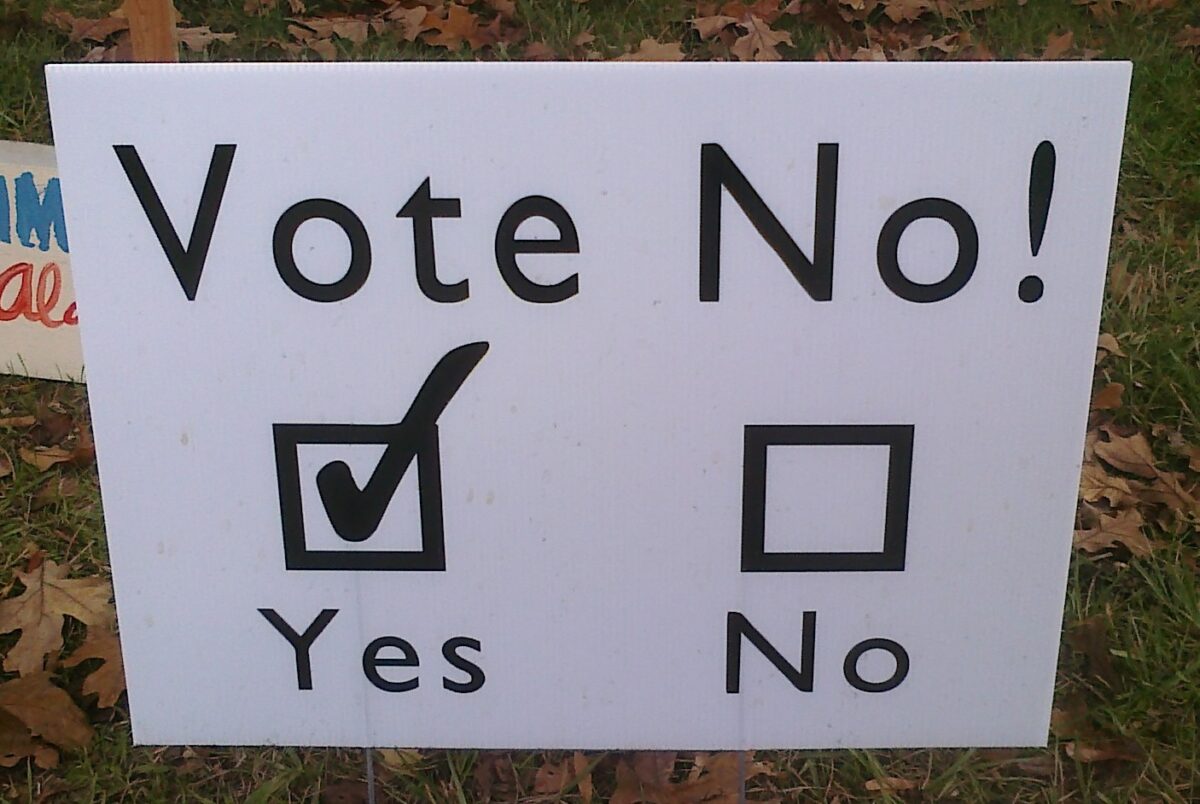
This year, our local elections should be substantive, not boring.
This week, two of our favorite local political pundits, Aaron Keck and Tom Jensen, recorded an election preview where they predicted our municipal elections would be “boring.” Noting the absence of candidates running against development and growth, Keck and Jensen suggested that this election would be quieter, as all the candidates basically agree on the issues that have historically dominated our local elections.
In Carrboro, we already know the results, as there are only three candidates for the three council spots. In Chapel Hill, we have six candidates running for four spots, which is down from the nine serious candidates that ran in 2023. In both towns, the mayors are running essentially unopposed. For school board, we have four candidates for three spots.
But, as Keck and Jensen noted, a quiet election doesn’t necessarily predict an easy term ahead for whoever is elected. Some of the issues that will likely come up this fall—property tax increases, the impacts of federal government cuts on local budgets, and how to keep our community together in what is an extremely challenging time for many of us—will be difficult to resolve no matter who is elected.
Unfortunately, until the national political climate changes, it’s unlikely that things will get better for our towns, or the people who live here. But, our elected officials can take actions that will have medium- and long-term benefits, but only if they prioritize them.
Blue Hill is a model for what we can do when times are tough
In 2010, when Chapel Hill was facing severe economic pressures due to the 2008 financial crisis, the Chapel Hill Town Council started working with local businesses to lay the groundwork for the area we now call Blue Hill. They made it easier to build housing in what were aging shopping centers, and as a result we’ve added close to 2,000 homes to an area that used to have none.
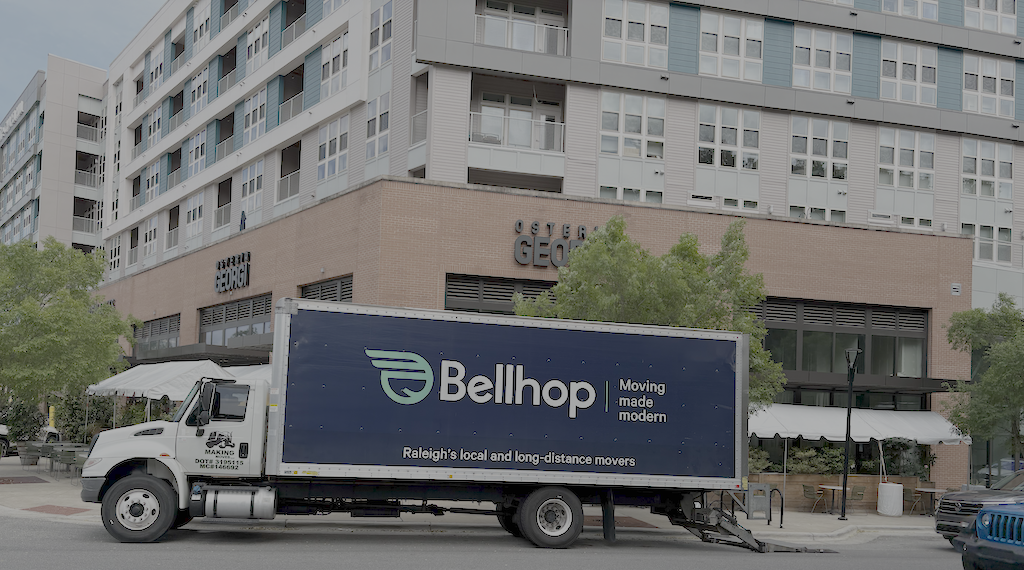
By almost any measure, Blue Hill has been an overwhelming success. Even accounting for infrastructure investments made in the area, such as the extension of Elliott Road, Blue Hill has generated approximately $2 million in revenue for the town since 2014, when the district was created. By the end of the decade, Blue Hill is projected to produce a cumulative $8 million in revenue, and that’s not even counting our portion of the sales taxes collected in the district. (Without the housing nearby, it’s unlikely we’d have a Trader Joe’s, Whole Foods, Aldi, and a Food Lion within close proximity, let alone the many restaurants, coffee shops, and bakeries in the area). While we can and should address flooding at the Eastgate Shopping Center (other parts of Blue Hill were fine after Chantal), our businesses are only able to even consider rebuilding because this area is so successful.
If we had not created Blue Hill when we did, homes would be even more unaffordable in Chapel Hill than they are now, and property taxes would be higher. While the housing in Blue Hill wasn’t completed in time to help Chapel Hill weather the economic difficulties of the early 2010s, it is helping us meet our current challenges.
We need to ask questions about our current plans
In a period of rapid growth, town planning can feel like flying an airplane while trying to build it. Now that growth is slowing, our elected officials should use the time that would otherwise be spent reviewing development proposals to consider whether our plans are viable and still a good fit for our priorities. A few questions to consider:
Do we need to revise Chapel Hill’s downtown strategy?
In 2020, the town council voted to build a large parking deck that was intended to be a centerpiece of a larger transformation of our downtown. The council approved four large projects—a hotel, an apartment building, and two wet labs—while turning down several others. Unfortunately, none of these projects have broken ground, and the broader economic uncertainty increases the likelihood that they won’t be built at all.
Meanwhile, our brand new 1,000+ space garage, built at a cost of over $50 million, is so underutilized that several of the top floors are closed off, in part because the brand new elevators are not working. At present, the town is paying more than $1 million a year to cover the debt incurred to build the new deck (This works out to ~$50/year for the average homeowner in Chapel Hill). The worst-case scenario predicted by an independent consultant the town hired in the spring of 2020 to review the agreement the town signed with Grubb Properties to build the deck has come true.
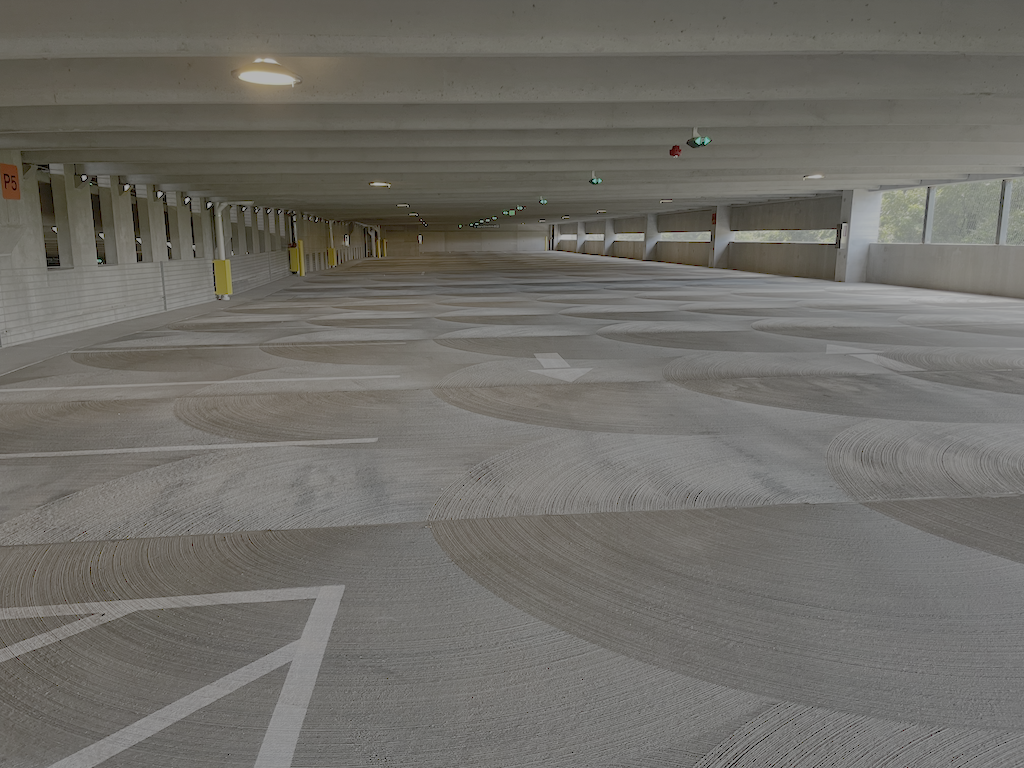
So what do we do now? Wait for a strategy put together in a very different political climate to come to fruition in five, ten, or even fifteen years from now? Or should we consider other strategies to get more economic activity downtown, like making it easier to build housing or raising the municipal service district tax to support activities that will draw people downtown? Should the town consider exercising a clause in the 2020 agreement with Grubb, which allows the town to repurchase the land (the Wallace Deck) they sold to Grubb if the developer has not started construction by December 31, 2025?
While previous councils have been willing to spend a lot of money on expensive visions for our downtown, there’s clearly a gap between what we want downtown to be, and what is economically viable.
Is Carrboro ready to enact its comprehensive plan?
In the past few decades, Chapel Hill has been the place for progressive action, while Carrboro seemed content with things as they were in 1990. But, since Carrboro passed its comprehensive plan in 2022, they’ve made slow and steady steps to enacting it. Their draft downtown area plan is an impressive vision for what a community that truly prioritizes climate action and race and equity—the two “pillars” of its comprehensive plan—can look like. The town is also rewriting its land use ordinances, hopefully with the same progressive vision.
But, they’re not done yet, and likely won’t be for a while. This year we’ve learned that elections really matter, but only if elected officials are willing to actually enact their platform and turn away from calls to take it slow.
Will Chapel Hill ever pass a LUMO? If not, what should it do?
Last year, we declared 2024 the “Year of the LUMO” in Chapel Hill. But, as was publicly disclosed a few months ago, progress on the LUMO stalled last fall when the consultant the town hired delivered a draft that was apparently so bad that town staff decided to start over. Now, what has been at minimum a five-year process has been extended to a sixth—and maybe a seventh or eighth—year. This means that someone born in 2003, when we last changed our land use ordinances, could have graduated from college and received a master’s degree in city planning in time to work on our new LUMO. That’s a long time, and Chapel Hill’s values—and needs—are very different now than they were in the early 2000s.
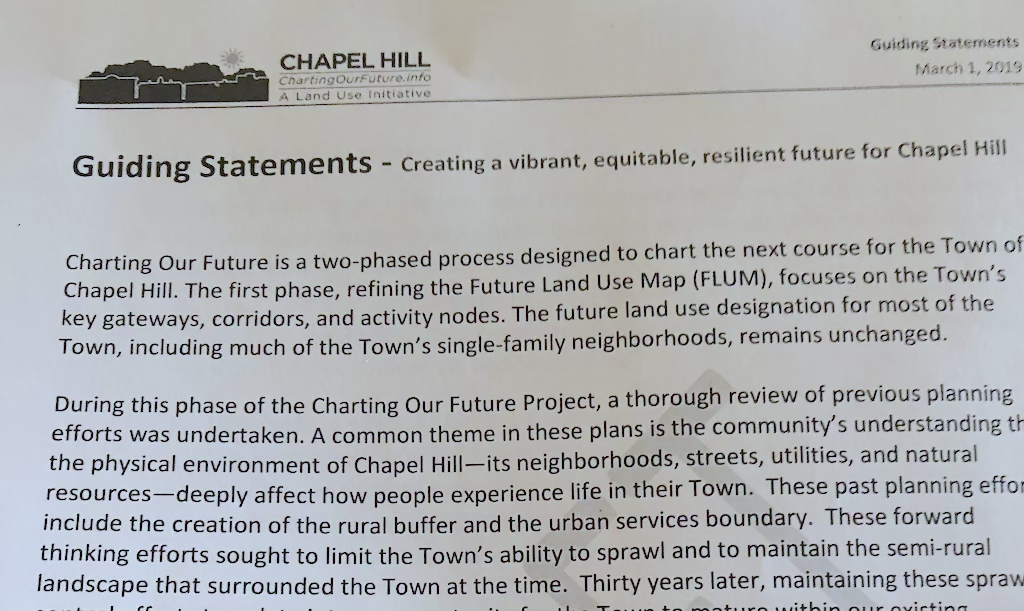
While some will tell you that land use ordinances are so complex and intricately connected that they can only be changed all at once, many communities, including our own, use text amendments to quickly enact changes that make it easier to build a backyard cottage for a family member or open a neighborhood coffeeshop. If passing a new LUMO proves to be too hard, the council should push for incremental changes that make it easier to do the things we need most—like new housing and more economic activity in our community. While town staff have agreed to allow the council to propose some minor changes to our land use rules this fall, this is not enough.
How will our schools win back students?
While our school system has many challenges, the core one is the significant decline in enrollment, particularly at the elementary level. We need to identify, with honesty and clarity, what’s driving the loss in enrollment, and what we can do to bring back students. Closing schools is a difficult and painful process, but it will be necessary if we can not turn back the drop in enrollment by the end of the decade.
Candidates need to be bold
In local elections, candidates tend to sound the same notes. People say they value everything good, and promise to prevent the things that are bad from happening if they can.
But in our current moment, that’s not enough. The time is ripe for not just bold proposals, but for a commitment to seeing them through, quickly. Addressing our community’s needs, finding remedies to our past missteps, and priming us to take full advantage of the many resources we already have will be essential to creating a community that we can all afford and treasure.
Even though we do not have competitive elections for every race this fall, we hope all the candidates use this opportunity to think seriously about what’s working, and what’s not, in our community. We don’t have time to wait.