
Tonight, the Chapel Hill Town Council will consider whether or not to approve up to 700 homes in north Chapel Hill. (The vote itself is scheduled for October 22).
On paper, this should be an easy decision. This is a large (45-acre) site in a key location, wedged between Harris Teeter (where we hear a certain football coach can be spotted on occasion) and Carol Woods (where the average resident probably has more degrees than UNC’s football team has wins). The project will include both apartments and for-sale townhomes, up to 80 of which will be affordable for middle-income families and individuals in our community. It includes a greenway that will make it possible for current and future neighbors to walk, bike, or roll to the Harris Teeter, and to the businesses in the surrounding shopping center.
And, of course, these residents will be able to get on Chapel Hill Transit, taking the bus to campus or to Eubanks Park and Ride, which as of August has daily service to Asheville.
The advantages of this project are endless. We’ll add more homes in our community, addressing the severe shortage in housing that has helped drive up prices, and add to the tax base, which will ensure that we’ll all pay a little less to live in a community with excellent services.
But this project has run into opposition from people living nearby, including those in Carol Woods, who have suggested that because of the damage caused by Tropical Storm Chantal we should halt future development.
While we do need to rethink our approach to stormwater in the wake of Chantal (adopting and implementing our stormwater plan would be a good start!), stopping this project (which has been under discussion for years) is a bad idea.
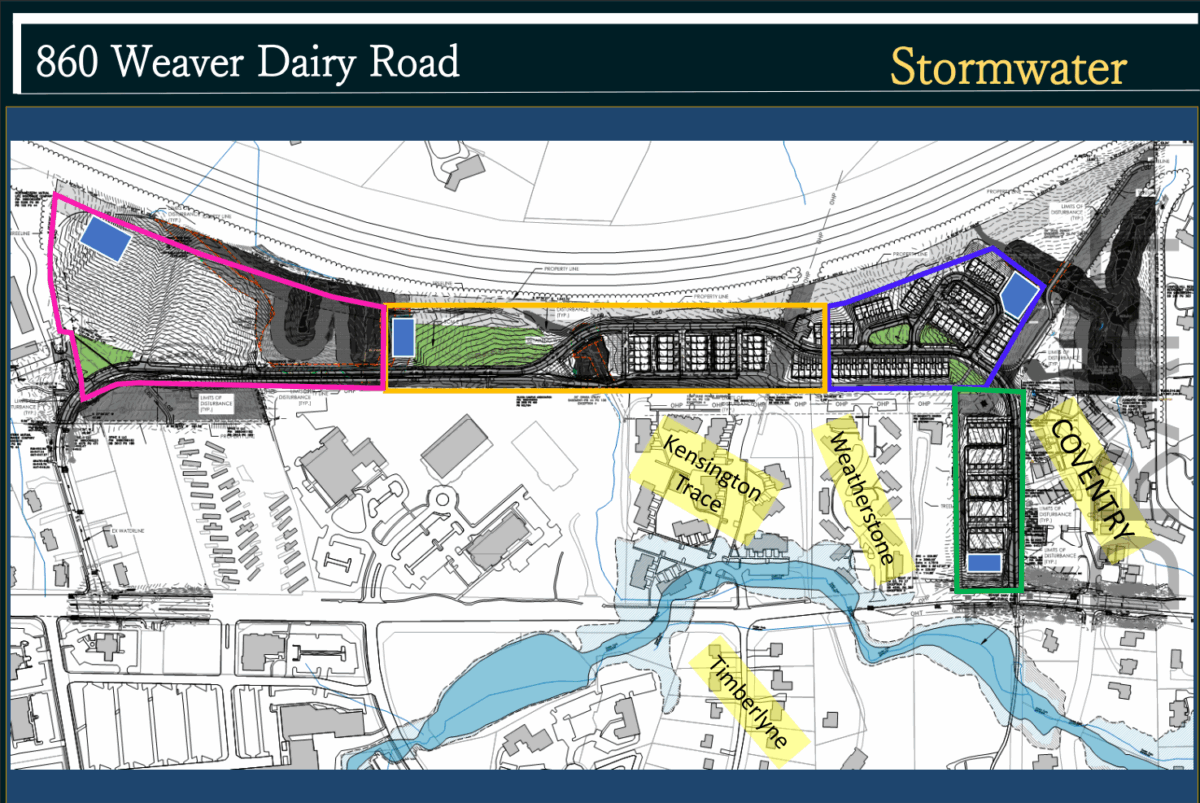
First, this project adheres to our town’s new stormwater standard, which requires projects to be able to handle a 100-year storm. This is, well, 100 years more than stormwater requirements for many existing homes, which were built before we thought about building with stormwater in mind.
To address stormwater, we need to consider the watershed, identify those properties that are responsible for excess runoff, and build infrastructure that addresses it. In Raleigh, the government has a Rainwater Rewards Program that helps homeowners pay for ways to address stormwater on their property, taking into account such factors as the quantity of the runoff and how it figures into the broader watershed. The program is in part funded through stormwater fees, which we all pay, and helps actually solve the problem.
If the council is concerned about stormwater, they should work on adopting a stormwater plan, and learn from Raleigh, Durham, and other communities that invest more money per capita in stormwater protections than we do. Voting against this development because of a problem that is a community responsibility won’t help anyone. And, it will actively harm the people we should be welcoming into our community, the many people who currently work here but can’t afford to live here because we don’t build enough homes.
If you support more homes in Chapel Hill, please write the council and ask them to support 860 Weaver Dairy. And, if you have time, attend tonight’s public hearing and let the council know why you support it.