
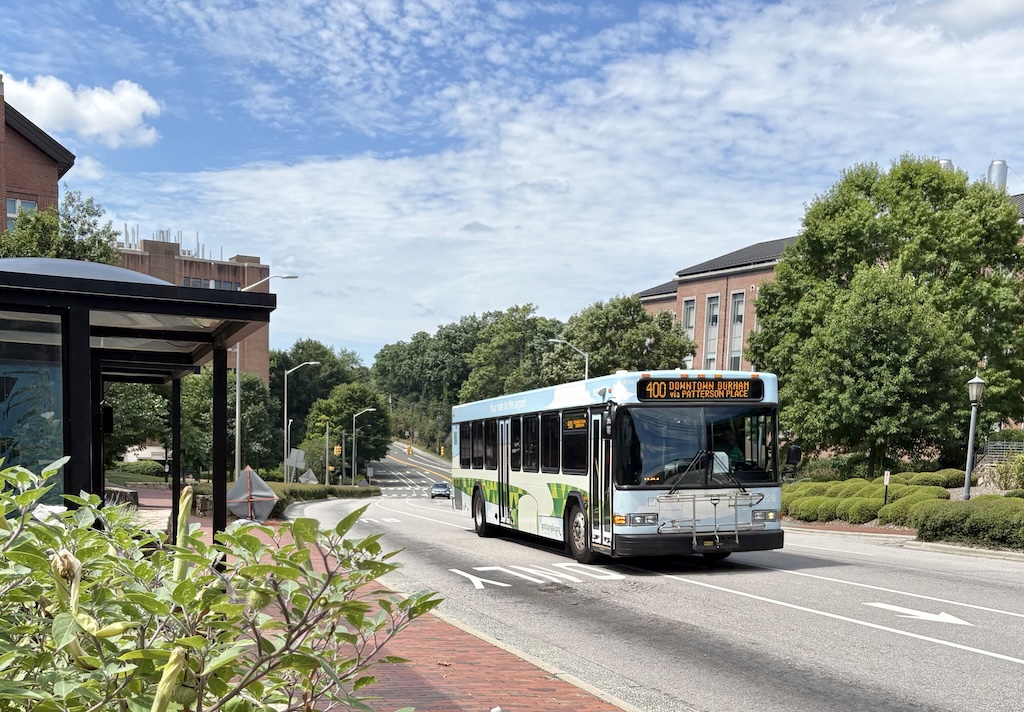
For the first time ever, you can decide to go to downtown Durham (or Chapel Hill) on the bus and get there in under an hour without looking at a schedule.
Why? Because as of yesterday, August 3, the 400/405 bus runs every fifteen minutes, starting at 5:40 am in Chapel Hill, and 5:45 am in Durham, and running all the way until 7 pm, when the buses keep running at reduced frequencies until 11 pm.
Why this matters
While people talk a lot online about fare free buses, most transportation planners argue that it’s frequency that matters more.
The reason is pretty simple. Imagine you’re on a lunch break from your job in Chapel Hill. You only have an hour to get to a restaurant, eat a meal, and return to the office. You look up your options, and there are two places that look good.
The first restaurant is a 5-minute walk from your office. (Given it’s Chapel Hill, the odds are pretty good it sells fried chicken.) With taxes and a tip, your lunch will cost $15.
The second restaurant is a 15-minute walk away. Because it’s a bit further from downtown, it’s a little cheaper, so you’ll be able to get a meal for $13, including taxes and tip.
Which do you choose? If you had a longer lunch break, the second restaurant might be appealing, but with just an hour break, a thirty-minute walk leaves just a half-hour to order your meal and eat. If there’s a line, because people with more time on their hands want to save $2, you might not get to eat at all.
In effect, you’re choosing to pay $2 more for a closer option, not just because it’s convenient, but because the alternative might lead to you missing lunch altogether.
People value time more than money
The same goes for transit. A recent study found that increasing the frequency of transit by just ten percent increases ridership by almost 25 percent, while lowering the cost by ten percent only increased ridership by 5 percent.
This is even true for people who don’t make a lot of money, in part because transit frequency also increases reliability. Consider the employees of the restaurants in the above example. Most likely, most of them can’t afford to live in Chapel Hill because we don’t build enough housing. But, they also don’t have the option of arriving at work when they feel like it. Frequent bus service is also more reliable, in part because the system has more service.
Again, this is easy to show with an example. Now imagine you’re a restaurant employee who has to be at work in downtown Chapel Hill at 10 am to start your shift. You live in Durham, and have a way to get to the downtown bus station (maybe you take the bus there, maybe you have a friend or family member who can drop you off on their way to work somewhere without transit service). If you drive, you’ll spend at least $5 a day on gas, and another $5 a day on getting your car repaired every so often (usually at the worst possible time).
Until today, the 400/405 ran every thirty minutes or so. To get to work at 10, you would need to get to the bus station in time to catch the 8:45 am bus, which would put you at the Varsity Theater in downtown Chapel Hill at 9:31 am. If you miss that bus, or, for some reason it isn’t running, you’d have to wait in Durham for thirty minutes to catch the 9:15 am, and then hope that the next bus is on time (and you’ll still get to work a few minutes late, because the bus doesn’t arrive until 10:01 am).
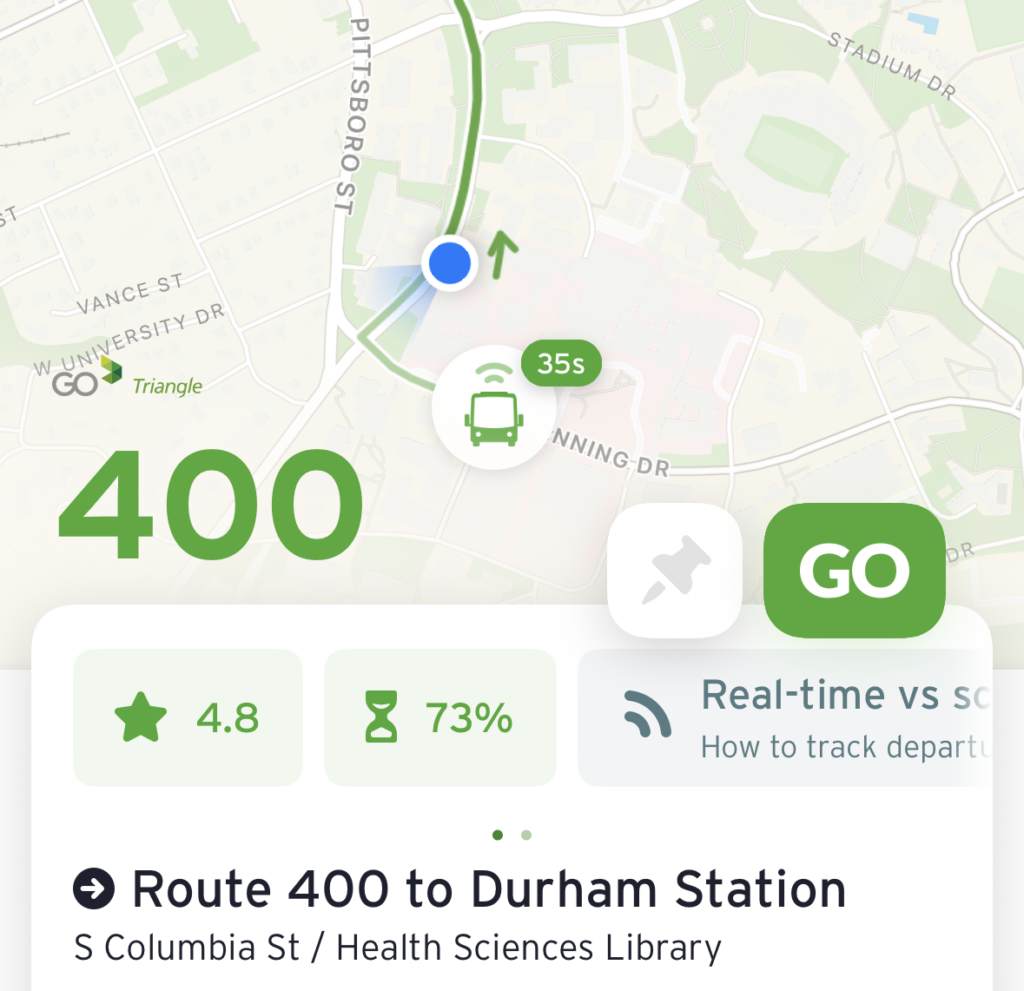
If you wanted to be sure you’d get to work by 10, you could try to get the earlier bus (8:15 am) and then hang out in Chapel Hill for an hour before your shift starts. Or, you could do what a lot of people end up doing, and drive to work, even though you end up working an extra hour just to pay for your travel costs ($10 a day, and that doesn’t include the price of parking).
But in the new schedule, you’ll be able to take the 9:00 bus, which now takes just 40 minutes due to eliminating a few unnecessary stops between Durham and Chapel Hill. And, if you miss that bus, or if it’s not running, you can take the 9:15 bus, which gets to the Varsity at 9:55, just in time to get to work. (And even in the worst case scenario, you could catch the 9:30 bus, which puts you in Chapel Hill by 10:10). By doubling the frequency of bus service, GoTriangle will save people hours of time each day that they used to spend waiting on the bus.
Hanging out in Durham (or Chapel Hill) is about to get a lot easier
While some people spend a lot of time in both Chapel Hill and Durham, it’s easy for us to get stuck in our routine and spend time where we live. If you work or study in Chapel Hill, getting to Durham used to mean you’d have to choose between slow, infrequent bus service (which got worse at night) or going back home, or to a park-and-ride lot, and then driving 30 minutes or more to Durham.
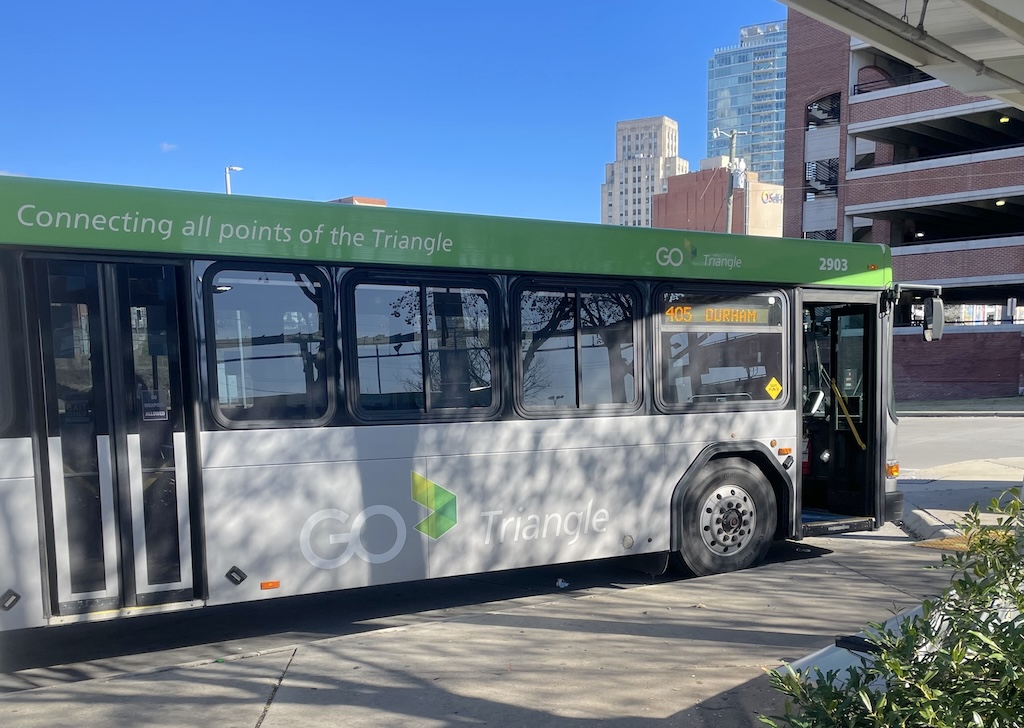
Now, you’ll be able to get off work at 5 pm, catch the 5:21 bus in front of Carolina Coffee Shop, and get to downtown Durham at 6:07 pm. You can go out to eat, watch a movie at the Carolina Theater, go to a show at DPAC, or take a Rooftop Sound Bath at the Unscripted Hotel (I have no idea what this is). The last bus leaves Durham at 11 pm, which puts you back in downtown Chapel Hill at 11:34 pm. While the bus frequency slows down after 7 pm, the late night service (the bus used to stop at 10) means that you can go out in Durham or Chapel Hill, have a full night, and still get back home without having to shell out $30 or $40 for a ride sharing service.
Paying for good service is worth it
Even though GoTriangle now charges fares—$5 a day, or $80 a month—the extra service is worth it. And, if you study or work at UNC or Duke, GoTriangle is free (you’ll need to re-register each year.). There are also other cheaper options, like becoming a member of Bike Durham for just $35, which will give you a free annual pass. GoTriangle also offers free fares for seniors, teenagers, people with disabilities, and people living in low income households.
But, even if you had to pay $5 a day to ride the bus, GoTriangle is a bargain compared to the cost of driving. And, with service every fifteen minutes, you can get between Chapel Hill and Durham faster than ever. Let’s celebrate GoTriangle’s first high-frequency bus line, and hope that other lines follow suit in due time.