
Artificial scarcity is imposing a harsh choice on our school system. How did we get here?
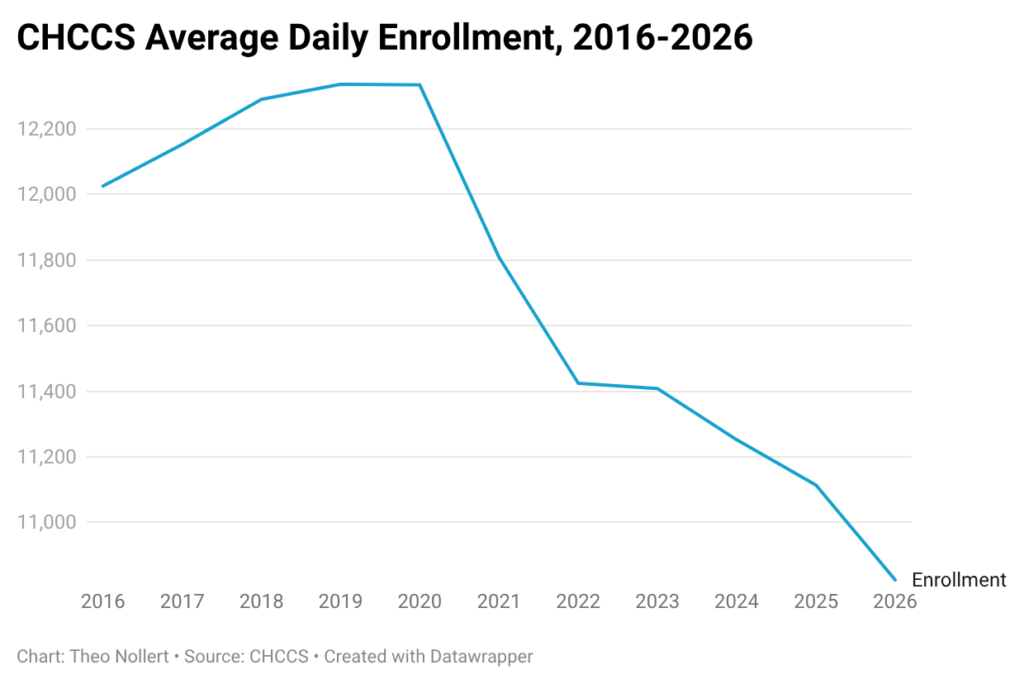
The Chapel Hill Carrboro City Schools are facing a budget gap. This year alone, enrollment is down 289 students. The school receives ~$7,500 from the state for each student enrolled. That drop will cost the school $2.2 million in funding. (The Indy reports that the district is down 350 students, which would be a drop of $2.625 million.)
To make ends meet, the district plans to close schools.
The School Board and the County Commission oversee the district’s budget. I know what it feels like to agonize over fiscal tradeoffs while trying to achieve the public good. I sympathize with them, and I make no comment here about what they should do.
Instead, I want to point out that most of our problems are downstream of a deeply irresponsible state-level approach to government funding—one which has imposed artificial scarcity on local governments that are trying to balance the widespread demand for reliable, high-quality services and facilities with antipathy for property taxes.
Back in 1994, families and five school districts filed a lawsuit, Leandro v. State of North Carolina, against the state of North Carolina, arguing that they did not receive sufficient resources to provide children in their districts a sound, basic education. The case meandered through court for the next thirty or so years before the NC Supreme Court got fed up and ordered the legislature to meet schools’ financial needs.
The result was the Leandro Plan, a comprehensive, multi-billion-dollar plan intended to guarantee every child that sound, basic education.
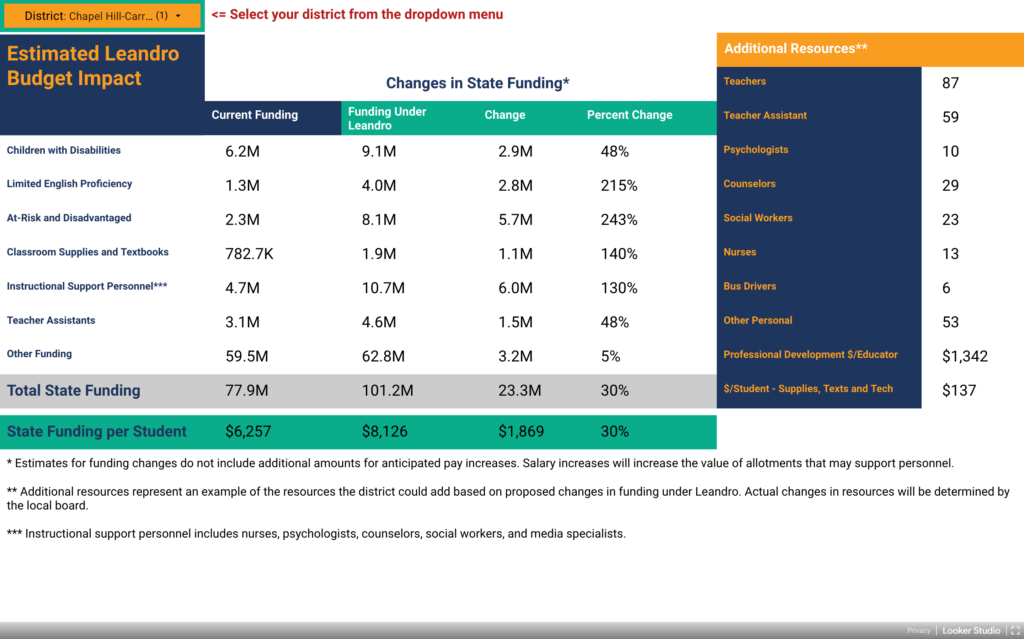
The Chapel Hill-Carrboro City Schools district is one of the most lavishly funded districts in the state, but even we would have seen funding gains under the Leandro plan. In fact, according to a 2022 tool, the district would have seen an estimated 30% increase in state funding under the plan—an additional $23.3 million.
Had that taken place, the conversations in our district would no doubt be very different.
Unfortunately, as soon as the Republicans gained control of the Supreme Court, they began rehearing cases with unfavorable rulings and issuing new ones. One of the cases they reheard was the Leandro case. More than two years later, we’re still waiting for a ruling—and the funding has been held in limbo, even as the state legislature continues to slash state revenues and pilot us toward a statewide budget disaster.
Knowing the history of our financial woes can’t save us from hard short term choices. But I think it’s important to remember who forced these choices on us. We can, and should, build more housing in Chapel Hill and Carrboro. It will create more demographic balance, more attainable prices and affordable rents, and ease some of the financial pressure on our tax base. If we can’t replenish the schools fast enough to dodge this hit, the lion’s share of the blame should go to the Republicans’ deferral of the Leandro plan and their ongoing effort to subsidize the wealthy with irresponsible tax cuts.