
Two things have led me (us) to republish this longish piece by Town Councillor, Theo Nollert. First, I think it is a very good piece on its own. And second, it is a useful read in context of today’s news that my State Senator, Graig Meyer has announced he is stepping from the NC State Legislature. Here it is, in it’s entirety, copied (with the author’s permission ) from Theo’s substack
What makes people run for office? And what governs their behavior once they’re in? I’ve been pondering my own motives, and thinking about what I observe in others.
Every politician has a unique combination of driving forces. You can imagine mapping every possible motive onto a radar chart (also known as a spider chart) and developing a representation of each person’s character.
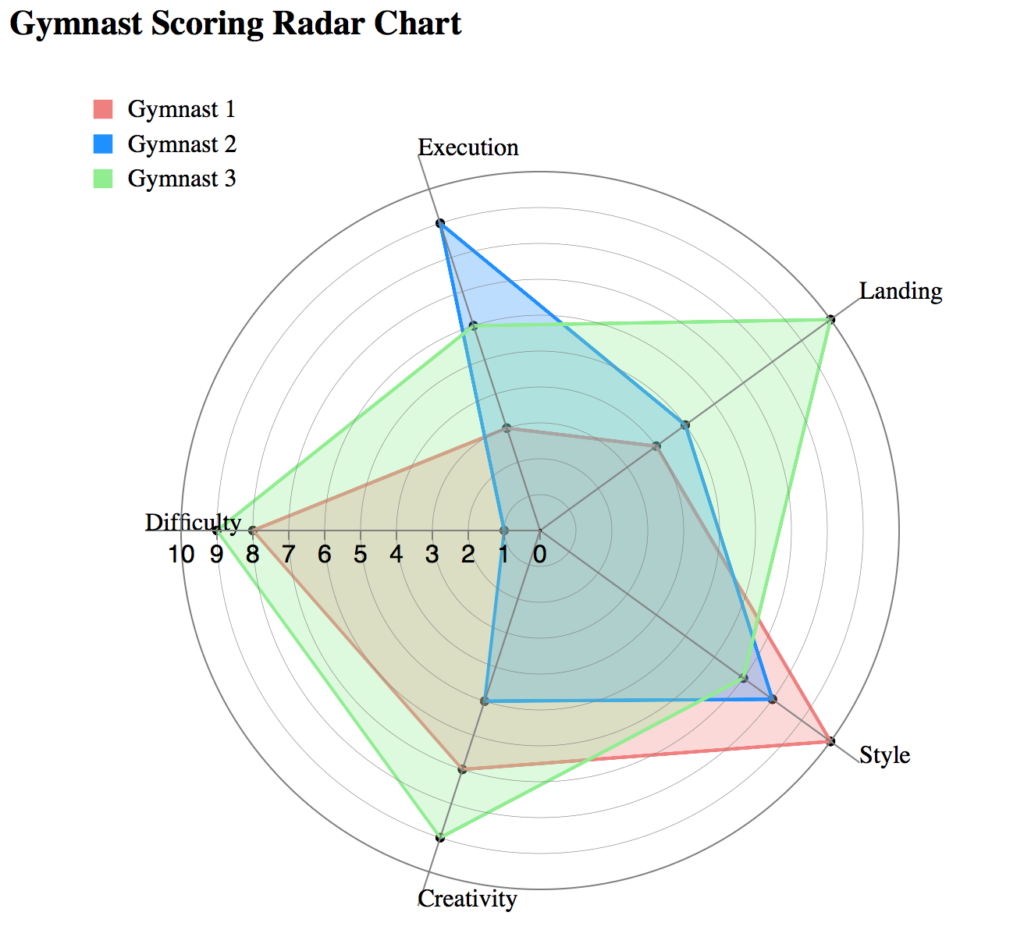
If you’re reading this in a moment of leisure, have a think about what words come to mind to describe the motives of powerful people. Below, you’ll find five primary motives under which I think other driving forces can be classified. There are lots of ways to arrange these motives, and I’d be interested to know what words you find missing, or how you’d arrange them differently.
Ego
Everyone has an ego. People who run for office are no different. It takes a healthy sense of self-worth to compete for and to assume leadership. The desire for control, power, status, and attention are all manifestations of ego—as is the willingness, or desire, to express oneself.
All of those desires can be helpful in moderation. If you care about control, you’ll be invested in decision-making when it really counts. If you care about power, you’ll learn how to actually make things happen. If you care about status, attention, and expressing yourself, you’ll be willing to use your platform as a role model and a messenger. We need people who are willing to lead, and leading requires confidence (a much more appealing word than ego).
Leading also requires humility. When the ego gets out of whack, it can create conflict between board members, unrealistic expectations for personal control over processes and outcomes, and blindness to one’s own biases and to others’ expertise. It can make it harder to hear new perspectives or to absorb surprising new information (what statisticians refer to as updating your priors). It can make you seek power to feel powerful rather than to do good things.
If you’re following this Substack, or watch any of my videos, then you’ll know that I feel compelled to express myself in the public forum. I’ll let you draw your own conclusions about whether I wrestle more with an excess or absence of ego!
Ambition
Ambitious people have a strong desire to achieve or accomplish something. That something can be positive or negative. People with a clear agenda or a core set of issues have ambition—they have things they want to fix or get done. There are also people who simply want to be successful. To go back to ego, some folks have ambition, but their ambition is simply to acquire status. I’ve spent a fair amount of time lately reading Robert Caro’s astounding biography of LBJ, an incredibly detailed portrait of a supremely ambitious man fixated almost entirely on his own status.
I like people who have clear policy agendas and clear positions on issues—or at least, I like the ones whose issues and goals aren’t morally repulsive to me—and I have a harder time connecting with people who don’t have have pretty specific goals on a few particular issues. I especially like people with lots of curiosity, which is a key ingredient for good conversation and for good, open-minded governance.
For me, affordability is an overriding concern. Because I’m on the town council, I write a lot about housing. I’m also pretty interested in convenient, affordable transportation; the two are intimately connected.
How we handle our housing and our transportation directly impacts our environment, as does where we get our energy—and how we get our energy is itself closely tied to affordability, and to our international independence.
When I was involved in the graduate student government, I was very focused on fair wages and pretty interested in more abstract questions about how to design our education system to maximize human flourishing. Though my interests have narrowed temporarily to match my very limited powers (on the town council) and our finite legislative influence (at Carolina Forward), one of my favorite things about my day job and about my electoral office is that both hold the promise of many important and morally fulfilling new fields of inquiry and activity.
Naïveté
Take a little naïveté, a heap of ambition, and a healthy dose of ego, and you’ve got yourself a candidate. That was my configuration, at any rate. There are other recipes.
I’m sure there are candidates who are clear-eyed, level-headed, and intricately familiar with the inner workings of the machines they’re trying to influence, but the truth is that our world is so immensely complicated, it’s hard even for seasoned politicians to escape a little naïveté when they enter a new arena.
I certainly had it when I first ran for office. I’ve seen that innocence turn to experience in my political contemporaries, and I have to imagine (and certainly hope!) that people who are watching me have observed a similar sort of change.
What one wants is not the mere loss of innocence so much as the development of wisdom. When I have felt most like I am growing is when I am moving patiently and judiciously. If you’ve practiced an instrument or played a sport, you’ll know the feeling: it’s one I first knew intimately as a violinist and as a squash player.
Money
Some people really do go into politics to get rich, I guess. I haven’t met anybody like that yet, except that one time I rode in an elevator with Tim Moore at a UNC football game.
Making money is the only motivating force on this list that seems purely bad to me. That said, I think politicians should be paid a living wage.
The salary for our state legislators is about $14,00 per year. When you add in mileage reimbursements and the daily stipend (“per diem”) that they receive when the legislature is in session, their total compensation might reach $30,000 or so. It’s no wonder that career and income diversity is hard to achieve—only the independently wealthy or those with lucrative, flexible jobs can run without jeopardizing their financial security.
Power and money go hand in hand, so it’s vitally important that we develop a system that bans political profiteering, builds some serious guardrails, and equips independent watchdogs to investigate and punish corrupt politicians.
None of my career choices have been primarily motivated by the hope of making lots of money. From my childhood dreams of becoming a professional violinist to the English professor phase of my twenties through the current course of public service, nothing I’ve done has had much chance of being lucrative. But there are other compensations. My life is interesting and fulfilling; my friends are kind and thoughtful. I sleep very well at night.
Service
A lot of elected officials—certainly the ones that I know—are powerfully driven by a sense of morality. That morality manifests as an impulse to serve. There are more ways to serve, of course, than running for and holding office. Service requires some sacrifice (time, privacy, money, thought, emotion), but it scratches an itch that is, for the servant, impossible to ignore.
Each person’s approach to service falls somewhere on a sliding scale between very abstract and very particular. Both approaches have value, and drawbacks.
The abstract approach to service treats power as a means to some good end. People who view service in this way are looking for utilitarian answers to problems. They like data and objectivity, and they want to spend their time figuring out what does the most good for the most people.
The particular approach to service is all about representation. Representatives channel everything through their relationships: with specific people, with places, with the idea of a community, with a history. They’re driven by what they’ve heard from specific people, by wanting to help specific people, and they think there’s more to making choices than just finding the right numbers.
Both are helpful. In a world of functionally finite resources, we need people who will look at numbers and figure out where the dollars they control can do the most good. We need people who think about what doing the most good means, and for whom it is to be done. And we need people who connect with, and surface, individual experiences, so that the tyranny of the majority will not license atrocities against some small minority.
Here’s what can go wrong in each approach.
The utilitarian, who lives at the level of abstraction, runs the risk of losing touch with people’s feelings. Losing touch with people’s feelings means losing track of the political Overton window, but it can also make it hard to know what to do when the choice isn’t between a great option and a terrible option, but between two good options or two bad options.
On the other hand, the representative runs the risk of being driven too much by individual experience—by personal connections, by personal history, by the voices of the few who happen to find them—and not by a truth which can be found only in aggregation.
People are self-interested creatures. Each of us can hold only a very little bit of information at once, yet we live in a world that can most accurately be described by unfathomably enormous quantities of information. We have lots of wonderful tools to interrogate the data of our world, and we must be careful not to let the people we know and the stories we hear outweigh all the experiences we don’t encounter and stories we don’t hear. That’s when data helps to flesh out a more comprehensive picture of reality.
My natural instinct is to hope that most political decisions will somehow be math problems, for which there is a right answer. Sometimes our decisions really are that simple. Other times, they are not.
That’s the business of leadership.
Fear
This wasn’t in my original list. It didn’t occur to me. Rather, I saw it in Graig Meyer’s essay this morning:
A naivete that I carried into politics more than 12 years ago was that if you elect good people, they will do the right thing. My time in the General Assembly has long since disabused me of that idealism. No matter their party, most politicians are subject to the deeply human motivation of fear… fear of disapproval, fear of failure, fear of loss. And those fears stop good people from doing hard things. Think about it this way: when advocates come to me with a problem they want to solve, my advice to them is generally not that they just need to explain the problem in a way that will ensure politicians will do the right thing – rather, I advise them on how they can build political pressure that will make politicians do the right thing.
He’s right! Politicians are very motivated by fear. Fear of how they’ll be perceived, fear of losing, as he says “status, power, and access.” Will saying this or voting for that cost me an election? Will telling the truth about my own personal views turn off this donor whose money I need? Is making an unpopular but morally good choice here worth potentially losing office, and thus losing the ability to make a more important moral choice later?
Politicians face choices like that all the time.
That fear is mostly a matter of self interest. It’s also often wrong. In my experience, the best way to overcome the type of fear that stands between you and a moral choice is to express it to friends whom you trust.
Good friends will shoot you straight on what they think the right thing to do is. Wise ones might even be right.